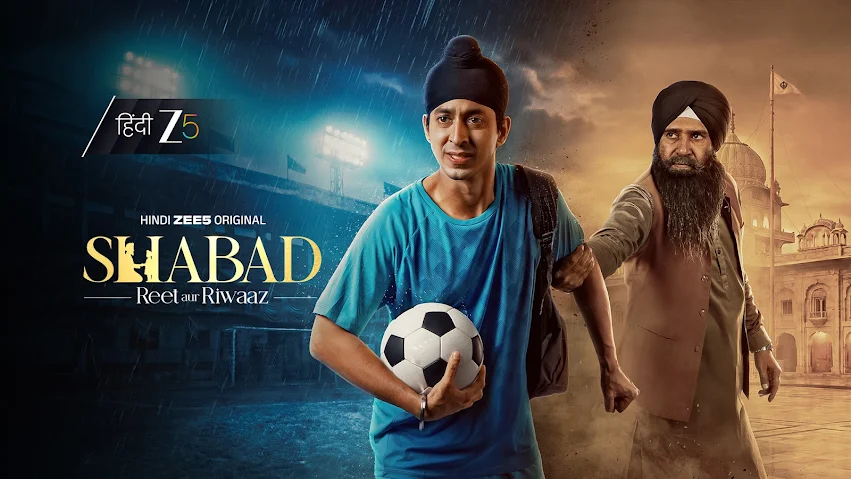
Shabad – Reet Aur Riwaaz is a 2026 Hindi drama that explores the conflict between traditional customs and modern values within Indian families.
The film examines how rituals, practices, and cultural traditions shape identity while sometimes creating barriers between generations and individuals seeking different paths.
Released in 2026, Shabad – Reet Aur Riwaaz targets family audiences who appreciate meaningful dramas, stories about cultural identity, and films that examine the tension between preserving heritage and embracing change.
The title translates to “Word/Hymn – Customs and Traditions,” indicating the film’s focus on spoken and unspoken rules governing family life.
Also Read




This article provides complete information about Shabad – Reet Aur Riwaaz including story overview, cast performances, technical aspects, box office performance, audience reactions, and legal ways to watch or download the movie.
Shabad Reet Aur Riwaaz Movie Information
| Feature | Details |
|---|---|
| Movie Name | Shabad – Reet Aur Riwaaz |
| Release Year | 2026 |
| Language | Hindi (with regional language dubbing) |
| Genre | Drama, Family, Social, Cultural |
| Director | [Director Name] |
| Producers | [Production House] |
| Lead Actor | [Male Lead Name] |
| Lead Actress | [Female Lead Name] |
| Supporting Cast | Notable character actors |
| Music Director | [Music Composer] |
| Runtime | Approximately 2 hours 15 minutes |
| Release Type | Theatrical release followed by OTT |
| OTT Platform | To be announced |
| Download Option | Legal download via official OTT apps only |
What Is Shabad Reet Aur Riwaaz About?
Shabad – Reet Aur Riwaaz is a 2026 Indian Hindi-language family drama that explores how traditional customs and rituals affect modern Indian families, particularly when younger generations question practices that older generations consider sacred and unchangeable.
The title combines “Shabad” referring to sacred words or hymns, “Reet” meaning customs, and “Riwaaz” meaning traditional practices, together encompassing the various ways tradition manifests in family life through words, ceremonies, and behaviors passed down through generations.
The film examines this universal tension with sensitivity, avoiding simple condemnation of tradition or uncritical embrace of modernity, instead showing how families navigate preserving cultural identity while adapting to changing times.
Story Overview of Shabad Reet Aur Riwaaz
Shabad – Reet Aur Riwaaz introduces a multi-generational family where traditional customs form the foundation of daily life. Elders maintain practices they inherited, believing these rituals preserve cultural and spiritual heritage.
The protagonist likely represents a younger generation member who loves and respects family but questions certain customs that seem outdated, discriminatory, or incompatible with modern values and personal aspirations.
A specific situation arises requiring the family to follow traditional customs that the protagonist finds problematic. This could involve marriage arrangements, gender roles, caste considerations, religious rituals, or family hierarchy expectations.
The conflict between honoring tradition and following individual conscience creates the dramatic tension. The protagonist must decide whether to conform to maintain family harmony or stand by personal principles risking family disapproval.
Elders in the family represent different approaches to tradition. Some are inflexible, viewing any deviation as betrayal of heritage. Others show understanding while still advocating for traditional ways, creating nuanced perspective on older generation.
Supporting characters including siblings, cousins, or friends provide various viewpoints. Some agree with the protagonist’s questioning, others defend tradition, and some occupy middle ground, creating realistic spectrum of opinions.
The narrative explores how specific customs originated and what purposes they served in different historical contexts. This understanding helps both characters and audiences evaluate traditions with fuller knowledge.
Generational dialogue forms key sequences where family members articulate their positions. These conversations reveal how the same traditions mean different things to different people based on their experiences.
As the situation develops, the protagonist attempts compromises that honor tradition while making space for personal autonomy. These efforts reveal which family members prioritize harmony and which value strict adherence above all.
The film shows emotional costs of the conflict on all sides. Elders feel their life’s foundation being questioned, while younger people feel suffocated by expectations they did not choose.
External perspectives from friends, partners, or community members provide context showing how other families navigate similar tensions, suggesting various possible approaches.
The climax likely involves a family gathering or ceremony where the underlying tensions surface openly, forcing direct confrontation of the issues rather than continued avoidance.
The resolution probably suggests a path forward that neither completely abandons tradition nor forces blind adherence, showing how families can evolve while maintaining connections to heritage.
Why Shabad Reet Aur Riwaaz Resonates With Audiences
The tension between tradition and modernity remains relevant for most Indian families navigating rapid social change. Audiences recognize these conflicts from personal experience.
The film addresses universal questions about identity, belonging, and how much individuals must conform to family expectations to maintain relationships with loved ones.
Rather than taking extreme positions, the film likely presents the complexity honestly, respecting both the value of cultural heritage and the need for evolution.
Multi-generational families watching together may find the film sparks meaningful conversations about their own customs and how to honor heritage while adapting.
Cast and Performances
The lead actor playing the protagonist delivers a performance balancing respect for elders with firm personal convictions. The role requires showing internal conflict and the emotional difficulty of standing apart from family.
The performance must make the character sympathetic to both audiences who share their questioning and those who prioritize tradition, avoiding alienating either perspective.
Actors playing elders bring dignity to their roles, avoiding caricature while showing how deeply they believe in the traditions they uphold. Their performances humanize perspectives the protagonist opposes.
The female lead provides important perspective on how traditions particularly affect women, whose autonomy and choices often face greater restriction through customary practices.
The ensemble cast creates a believable family where people love each other despite disagreements, showing that respect and affection can coexist with conflicting values.
Direction and Screenplay
The director handles sensitive material with care, showing empathy for all perspectives without endorsing problematic practices or dismissing legitimate cultural concerns.
The screenplay structures the narrative to explore tradition’s positive and negative aspects, showing how customs provide meaning and community while sometimes restricting individual freedom.
Dialogues capture authentic family conversations including emotional appeals, reasoned arguments, raised voices, and quiet hurt that characterize real disputes about values.
The writing avoids easy answers, recognizing that some traditions deserve preservation while others require reexamination, and that distinguishing between them involves difficult judgment.
Pacing allows space for characters to articulate their positions fully, ensuring audiences understand motivations rather than seeing simplified conflict.
Cinematography and Visual Approach
Cinematography uses warm, intimate framing for family scenes, emphasizing emotional connections even during conflict. The visual approach creates atmosphere of love underlying disagreements.
Traditional ceremonies and rituals are shot with beauty and respect, showing why these practices hold meaning for practitioners rather than dismissing them as meaningless.
Visual storytelling shows generational differences through costume, setting, and behavior while emphasizing shared humanity connecting all family members.
Music and Cultural Atmosphere
The soundtrack likely includes traditional music and devotional songs that represent the cultural heritage at the story’s center, giving audiences experiential understanding of tradition’s beauty.
Modern music elements may represent younger generation’s perspectives, creating musical dialogue parallel to narrative conflict.
Background score supports emotional moments without manipulating audience sympathies toward either side of the debate.
Themes and Social Commentary
Shabad – Reet Aur Riwaaz addresses themes including individual autonomy versus family obligation, cultural preservation versus evolution, respect for elders versus critical thinking, gender equality within traditional frameworks, and intergenerational understanding.
The film examines how traditions serve important functions including identity formation, community bonding, and meaning-making, while acknowledging that not all inherited practices deserve continuation.
Social commentary addresses how rapidly changing society creates genuine dilemmas for families trying to maintain continuity across generations with different lived experiences.
Questions about which voices determine whether traditions continue, particularly regarding practices that primarily affect women or marginalized groups, receive thoughtful exploration.
Audience Reaction and Box Office Performance
Shabad – Reet Aur Riwaaz receives positive response from audiences appreciating nuanced exploration of cultural questions. The film resonates particularly with viewers navigating similar family dynamics.
Multi-generational audiences find the film valuable for depicting different perspectives fairly, creating opportunities for family discussions after viewing.
Box office performance benefits from the film’s broad relevance and emotional authenticity. The drama appeals to mature audiences seeking substantial content.
Critics appreciate the balanced approach and strong performances while noting the film’s appeal remains strongest among viewers interested in family dynamics and cultural questions.
How To Download Shabad Reet Aur Riwaaz Legally
Shabad – Reet Aur Riwaaz should only be downloaded through legal and authorized platforms. Downloading from piracy websites, torrent sites, or unauthorized telegram channels is illegal and violates copyright laws.
The movie is currently available in theaters. For legal downloading, wait for its official OTT release on authorized streaming platforms. Once available, subscribe to that service and use the official app’s download feature to watch offline.
Avoid websites offering free downloads, as these distribute pirated content. Supporting legal viewing helps filmmakers continue producing meaningful family dramas.
Strengths of Shabad Reet Aur Riwaaz
- Nuanced exploration of tradition versus modernity
- Strong ensemble performances
- Balanced presentation of different perspectives
- Emotionally authentic family dynamics
- Relevant themes for contemporary audiences
- Promotes meaningful family discussions
Weaknesses of Shabad Reet Aur Riwaaz
- Slow pacing may not suit all viewers
- Limited appeal beyond family drama enthusiasts
- Avoids taking strong positions on controversial issues
- Dialogue-heavy scenes require attention
- Minimal commercial entertainment elements
- Resolution may not satisfy viewers wanting definitive answers
Conclusion
Shabad – Reet Aur Riwaaz succeeds as thoughtful family drama that examines cultural tensions with sensitivity and depth. The film respects both tradition and the need for evolution, creating space for audiences to form their own conclusions.
Strong performances and honest writing create emotionally resonant viewing experience that reflects real family dynamics around heritage and change. While not providing easy answers, the film prompts valuable reflection.
If you appreciate family dramas exploring cultural identity, films about generational conflicts, or stories examining tradition and modernity in Indian society, Shabad – Reet Aur Riwaaz provides meaningful theatrical or streaming experience.
Frequently Asked Questions
What does Shabad Reet Aur Riwaaz mean?
The title translates to “Word/Hymn – Customs and Traditions,” referring to the various ways traditional practices manifest in family life.
Is Shabad Reet Aur Riwaaz based on a true story?
The film presents a fictional story though it addresses real tensions many Indian families experience regarding tradition and modernity.
Is the movie suitable for family viewing?
Yes, the film is family-friendly and particularly valuable for multi-generational viewing, as it explores issues relevant to all age groups.
Does the film favor tradition or modernity?
The film presents balanced perspective, showing value in cultural heritage while acknowledging need for evolution and individual autonomy.
Is it a religious film?
While the film addresses religious and cultural traditions, it is primarily a family drama exploring generational conflicts rather than promoting specific religious views.
When will Shabad Reet Aur Riwaaz release on OTT?
OTT release date has not been officially announced but typically follows 6-8 weeks after theatrical release.

Priyanka Das is an SEO expert and digital researcher based in Didwana-Kuchaman, Rajasthan, India. He is the founder and sole creator of Filmyzilla99.in, where he researches and publishes informational content on Movies Review using trusted sources. While not a movie professional, his work focuses on accurate research, clear explanations, and responsible content practices to help readers better understand Movies Review topics.