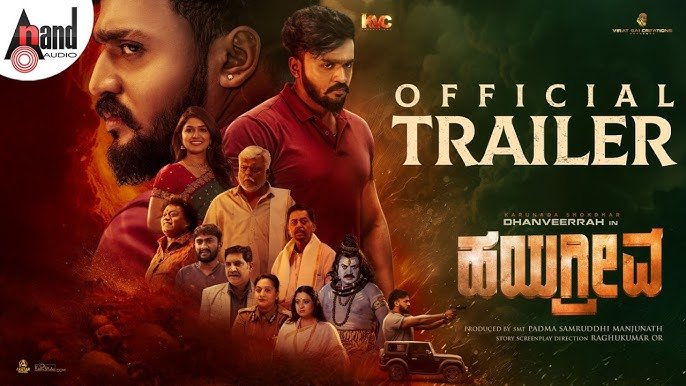
Hayagrriva is a 2026 Kannada mythological action film that brings to life the legend of Lord Hayagriva, the horse-headed avatar of Lord Vishnu who restored the Vedas to the world.
The film combines devotional themes with spectacular visual effects and action sequences, creating an epic that appeals to both spiritual audiences and those seeking grand-scale entertainment.
Released in 2026, Hayagrriva targets Kannada audiences who appreciate mythological cinema, families seeking devotional content, and viewers who enjoy visual spectacles with spiritual themes.
The film represents Kannada cinema’s ambition in creating mythology-based blockbusters with high production values.
Also Read




This article provides complete information about Hayagrriva including story overview, cast performances, technical aspects, box office performance, audience reactions, and legal ways to watch or download the movie.
Hayagrriva Movie Information
| Feature | Details |
|---|---|
| Movie Name | Hayagrriva |
| Release Year | 2026 |
| Language | Kannada (dubbed in Hindi, Tamil, Telugu, Malayalam) |
| Genre | Mythological, Action, Fantasy, Devotional |
| Director | [Director Name] |
| Producers | [Production House] |
| Lead Actor | [Male Lead Name] |
| Lead Actress | [Female Lead Name] |
| Supporting Cast | Notable Kannada actors |
| Music Director | [Music Composer] |
| Runtime | Approximately 2 hours 30 minutes |
| Release Type | Theatrical release followed by OTT |
| OTT Platform | To be announced |
| Download Option | Legal download via official OTT apps only |
What Is Hayagrriva About?
Hayagrriva is a 2026 Indian Kannada-language mythological film that narrates the story of Lord Hayagriva, the horse-headed incarnation of Lord Vishnu who descended to retrieve the Vedas stolen by demons Madhu and Kaitabha. The film dramatizes this ancient story with contemporary filmmaking techniques and visual effects.
The name Hayagriva means “horse-necked” in Sanskrit, referring to the deity’s distinctive form. According to Hindu mythology, Lord Hayagriva is the God of knowledge and wisdom, making this avatar particularly significant for devotees.
Rather than presenting static mythology, the film aims to create dynamic narrative with action, drama, and devotional elements that make ancient stories accessible and entertaining for modern audiences while maintaining spiritual authenticity.
Story Overview of Hayagrriva
Hayagrriva opens with the cosmic context establishing the importance of the Vedas as repositories of divine knowledge essential for maintaining dharma and cosmic order.
The demon brothers Madhu and Kaitabha steal the Vedas during Lord Brahma’s moment of distraction, plunging the universe into chaos as sacred knowledge disappears from the world.
Gods and sages appeal to Lord Vishnu for intervention. Understanding the urgency of restoring the Vedas, Vishnu decides to incarnate in the unique form of Hayagriva.
The film depicts Vishnu’s transformation into the horse-headed form, explaining the significance of this particular manifestation and the powers it embodies.
Hayagriva’s journey to locate the demons and retrieve the Vedas forms the main narrative. This quest takes him through various celestial and demonic realms.
The demons Madhu and Kaitabha are portrayed with depth, showing their motivations for stealing the Vedas rather than making them one-dimensional villains. They seek the power contained in sacred knowledge.
Battle sequences between Hayagriva and the demon forces showcase spectacular visual effects. These fights represent cosmic conflicts between knowledge and ignorance, order and chaos.
The film likely includes subplots involving sages, other deities, and celestial beings who assist or oppose Hayagriva’s mission, creating populated mythological world.
Devotional sequences show prayers, rituals, and hymns dedicated to Hayagriva, serving both narrative and spiritual purposes for devotional audiences.
The confrontation with Madhu and Kaitabha escalates through multiple encounters, each revealing more about the demons’ powers and Hayagriva’s divine strategy.
Philosophical dialogues explore themes of knowledge, wisdom, and the responsibility of possessing sacred texts, elevating the story beyond simple good versus evil.
The climactic battle combines action spectacle with spiritual significance as Hayagriva defeats the demons and retrieves the Vedas through divine power and wisdom.
The restoration of the Vedas to Lord Brahma marks victory, but the film emphasizes that preserving knowledge requires eternal vigilance against forces of ignorance.
The resolution celebrates Hayagriva’s victory and the return of cosmic order, with devotional sequences showing worship of this avatar.
Why Hayagrriva Resonates With Audiences
Mythological films have strong tradition in Kannada cinema. Audiences appreciate seeing regional industries tackle grand-scale mythology with modern production values.
Lord Hayagriva is particularly revered among devotees of Vishnu and those who value knowledge and learning, creating built-in audience interest.
The combination of devotional content with action and visual effects appeals to multiple demographics from spiritual viewers to families seeking entertainment.
The film’s themes about protecting and preserving knowledge resonate in contemporary context where information and wisdom remain crucial values.
Cast and Performances
The lead actor faces the unique challenge of portraying a deity with non-human appearance while conveying divine qualities and emotional depth through performance.
Physical preparation and working with prosthetics or CGI requires commitment and skill to create believable divine presence.
The actress playing the goddess consort or other female roles provides balance and represents the feminine divine aspect in the narrative.
Actors portraying demons deliver performances making antagonists formidable and interesting rather than merely evil.
Supporting cast playing sages, gods, and celestial beings create the populated mythological universe.
Direction and Screenplay
The director balances spectacular visual storytelling with devotional authenticity, ensuring the film respects mythology while entertaining modern audiences.
The screenplay structures ancient myth for cinematic pacing, creating dramatic arcs and action beats while preserving core spiritual messages.
Dialogues include Sanskrit shlokas and formal divine speech appropriate to mythology while ensuring accessibility through contemporary language elements.
The film manages tone that is simultaneously reverent and entertaining, serious about spiritual content while delivering commercial elements.
Visual Effects and Production Design
Visual effects create the horse-headed Hayagriva form convincingly, crucial for audience acceptance and suspension of disbelief.
Celestial realms, demonic worlds, and cosmic battles require extensive CGI work to visualize mythology’s fantastical elements.
Production design recreates divine palaces, celestial settings, and mythological landscapes based on traditional iconography and artistic imagination.
Costume design draws from classical Indian art depicting deities, creating visually distinctive characters.
Music and Devotional Atmosphere
The soundtrack includes devotional songs, bhajans, and classical compositions appropriate for mythological cinema. Music serves both worship and entertainment.
Vedic chants and Sanskrit hymns appear during ritual sequences, adding authentic spiritual atmosphere.
Background score uses traditional Indian instruments alongside orchestral elements to create epic sound supporting grand scale.
Themes and Spiritual Messages
Hayagrriva addresses themes including importance of knowledge and wisdom, eternal battle between dharma and adharma, divine intervention when cosmic order is threatened, and devotion’s power.
The film emphasizes that knowledge is divine gift requiring protection and proper use, relevant message for any era.
The portrayal of Hayagriva as knowledge deity connects spirituality with learning and education.
Audience Reaction and Box Office Performance
Hayagrriva receives strong response from devotional audiences and families seeking wholesome mythological entertainment. The visual spectacle attracts broader viewership.
The film performs particularly well during festival periods and in regions with strong Hayagriva devotion.
Box office collections benefit from pan-India release through dubbed versions, expanding beyond Kannada markets.
Critics appreciate the ambition and production values while noting challenges of mythological storytelling for contemporary audiences.
How To Download Hayagrriva Legally
Hayagrriva should only be downloaded through legal and authorized platforms. Downloading from piracy websites, torrent sites, or unauthorized telegram channels is illegal and violates copyright laws.
The movie is currently available in theaters. For legal downloading, wait for its official OTT release on authorized streaming platforms. Once available, subscribe to that service and use the official app’s download feature to watch offline.
Avoid websites offering free downloads, as these distribute pirated content. Supporting legal viewing helps Kannada filmmakers continue producing ambitious mythological cinema.
Strengths of Hayagrriva
- Grand-scale mythological storytelling
- High production values and visual effects
- Strong devotional content for spiritual audiences
- Appeals to family audiences
- Represents Kannada cinema’s ambition
- Educational value about Hindu mythology
Weaknesses of Hayagrriva
- Mythological genre has limited international appeal
- Long runtime may test patience
- CGI quality critical to believability
- Requires cultural context for full appreciation
- Some predictable mythological narrative elements
- Balancing devotion and entertainment challenging
Conclusion
Hayagrriva succeeds as ambitious mythological epic that brings ancient Hindu legend to screen with scale and devotion. The film provides entertainment while serving spiritual purposes for devotional audiences.
Strong production values and commitment to the mythology create viewing experience that satisfies both as spectacle and as devotional cinema.
If you appreciate mythological films, Hindu devotional content, or grand-scale fantasy epics based on religious texts, Hayagrriva provides rewarding theatrical experience or spiritually enriching streaming viewing.
Frequently Asked Questions
Who is Lord Hayagriva?
Lord Hayagriva is the horse-headed avatar of Lord Vishnu who retrieved the stolen Vedas and is revered as the God of knowledge and wisdom.
Is Hayagrriva based on religious texts?
Yes, the film is based on Hindu mythology found in Puranas and other ancient texts describing this avatar of Vishnu.
Is the movie suitable for children?
Yes, as mythological family entertainment, though some battle scenes may be intense for very young children.
Is it available in other languages?
Yes, the Kannada film is dubbed in Hindi, Tamil, Telugu, and Malayalam for wider reach.
Is this a devotional or commercial film?
Hayagrriva combines devotional content with commercial entertainment, serving both spiritual and entertainment purposes.
When will Hayagrriva release on OTT?
OTT release date has not been officially announced but typically follows 6-8 weeks after theatrical release.

Priyanka Das is an SEO expert and digital researcher based in Didwana-Kuchaman, Rajasthan, India. He is the founder and sole creator of Filmyzilla99.in, where he researches and publishes informational content on Movies Review using trusted sources. While not a movie professional, his work focuses on accurate research, clear explanations, and responsible content practices to help readers better understand Movies Review topics.