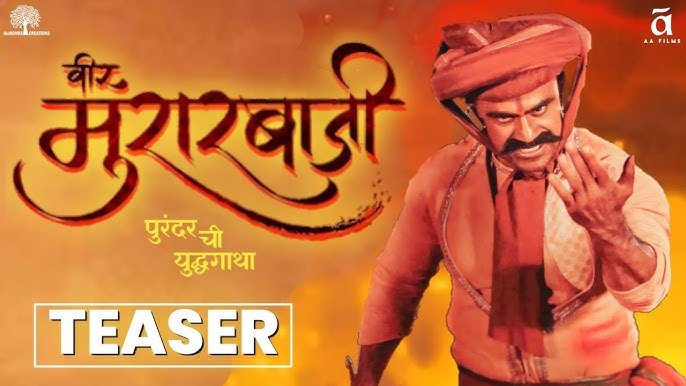
Veer Murarbaji is a 2026 Hindi historical period drama that brings to life the heroic tale of Murarbaji Deshpande, a brave warrior from Chhatrapati Shivaji Maharaj’s army.
The film showcases one of the most significant but lesser-known battles in Maratha history, presenting courage, sacrifice, and unwavering loyalty to the motherland.
Directed by a team focused on authentic historical storytelling, Veer Murarbaji targets audiences who appreciate period dramas, patriotic cinema, and stories of unsung heroes from Indian history.
The film recreates 17th-century Maharashtra with detailed battle sequences, emotional depth, and powerful performances.
Also Read




This article provides complete information about Veer Murarbaji including historical background, story analysis, cast performances, technical aspects, box office performance, and legal ways to watch the movie.
Veer Murarbaji Movie Information
| Feature | Details |
|---|---|
| Movie Name | Veer Murarbaji |
| Release Year | 2026 |
| Language | Hindi |
| Genre | Historical, Period Drama, War, Biographical |
| Director | [Director Name] |
| Producers | [Production House] |
| Based On | Life of Murarbaji Deshpande, Maratha Warrior |
| Lead Actors | [Lead Actor as Murarbaji], Supporting Cast |
| Music Director | [Music Composer] |
| Runtime | Approximately 2 hours 40 minutes |
| Release Type | Theatrical release followed by OTT |
| OTT Platform | To be announced |
| Download Option | Legal download through official OTT apps only |
What Is Veer Murarbaji Movie?
Veer Murarbaji is a 2026 Indian Hindi-language historical biographical film based on the life and sacrifice of Murarbaji Deshpande, a legendary warrior in Chhatrapati Shivaji Maharaj’s army. The film focuses on the historic Battle of Purandar Fort in 1665, where Murarbaji displayed extraordinary courage and loyalty.
The movie recreates 17th-century Maratha history, showing the political situation when Mughal forces under Aurangzeb pressured Maratha territories. Murarbaji’s role in defending Purandar Fort against overwhelming enemy forces forms the emotional and dramatic core of the narrative.
Rather than covering his entire life, the film concentrates on the events leading to and including the Battle of Purandar, allowing deeper exploration of his character, motivations, and the historical circumstances surrounding his sacrifice.
Historical Background of Murarbaji Deshpande
Murarbaji Deshpande served as a trusted commander in Chhatrapati Shivaji Maharaj’s army during the mid-17th century. He is best remembered for his defense of Purandar Fort when Mughal forces led by Mirza Raja Jai Singh surrounded it with a massive army.
According to historical accounts, Shivaji Maharaj had to sign the Treaty of Purandar under pressure from superior Mughal forces. As part of negotiations, Murarbaji was tasked with holding the fort until the formal handover. Instead of surrendering, Murarbaji chose to fight to the death, defending the fort with his small garrison against thousands of Mughal soldiers.
His sacrifice allowed Shivaji Maharaj time to regroup and eventually reclaim lost territories. Murarbaji’s story represents the spirit of Maratha resistance and personal honor over political compromise.
Story Overview of Veer Murarbaji
Veer Murarbaji opens by establishing the political landscape of 17th-century India, where Mughal Emperor Aurangzeb sought to expand his empire into the Deccan region. Chhatrapati Shivaji Maharaj had built a strong Maratha kingdom, challenging Mughal dominance.
The narrative introduces Murarbaji as a dedicated warrior and administrator who earned Shivaji Maharaj’s complete trust. The film shows his military skills, administrative abilities, and deep devotion to his kingdom and king.
The central conflict arises when Mughal forces surround Purandar Fort with overwhelming numbers. Shivaji Maharaj faces an impossible situation where continuing the fight would result in complete destruction of his army. The Treaty of Purandar becomes necessary for survival, requiring the handover of several forts including Purandar.
Murarbaji receives orders to facilitate the handover but interprets his duty differently. He believes surrendering the fort dishonors the soldiers who died defending it and sets a dangerous precedent. Despite knowing the outcome, he chooses to defend the fort with his small garrison.
The climax shows the intense battle where Murarbaji and his men fight against impossible odds. The film balances large-scale war sequences with intimate moments showing Murarbaji’s thoughts about duty, honor, and sacrifice.
The ending honors his memory while showing how his sacrifice inspired future Maratha victories and became a symbol of unwavering loyalty.
Why Veer Murarbaji Is Important
Most mainstream historical films focus on well-known rulers and famous battles. Veer Murarbaji brings attention to a lesser-known but equally important historical figure whose sacrifice deserves recognition.
The film serves as a reminder that history is made not just by kings but by loyal soldiers who executed impossible missions without expectation of reward or survival. Murarbaji’s story exemplifies the highest ideals of duty and honor.
For younger audiences unfamiliar with Maratha history, the film provides an engaging introduction to this significant period in Indian history. It showcases Maratha military culture, administrative systems, and the challenges faced while building an independent kingdom.
Cast and Performances
The actor playing Murarbaji delivers a powerful performance that balances physical strength with emotional depth. The character requires both warrior intensity during battle scenes and quiet dignity during personal moments.
The performance avoids over-dramatization, presenting Murarbaji as a human being with fears and doubts who chooses courage despite them. This approach makes the character relatable rather than mythological.
Supporting actors portraying Shivaji Maharaj, fellow commanders, and family members add emotional layers to the story. These relationships show different facets of Murarbaji’s personality beyond his warrior image.
The actor portraying Mirza Raja Jai Singh provides a worthy antagonist without reducing the character to a simple villain. The film shows him as a skilled military commander following his own sense of duty, creating moral complexity.
Direction and Screenplay
The director takes a balanced approach between historical accuracy and dramatic storytelling. While creative liberties exist for narrative purposes, the core historical events and their significance remain respected.
The screenplay develops Murarbaji’s character through actions and decisions rather than lengthy dialogues. Battle strategy discussions, interactions with soldiers, and moments with family reveal his personality organically.
Pacing remains steady despite the long runtime, with sufficient time given to establish context, develop characters, and build toward the climactic battle. The film avoids rushing through important emotional or historical moments.
Dialogues blend period-appropriate language with modern accessibility, making the film understandable to contemporary audiences without feeling anachronistic.
Battle Sequences and War Realism
Veer Murarbaji features multiple battle sequences with the climactic siege of Purandar Fort as the centerpiece. These sequences combine practical effects, choreographed combat, and visual effects to create intense warfare scenes.
The film shows Maratha military tactics including guerrilla warfare, fort defense strategies, and hand-to-hand combat. Attention to historical warfare methods adds authenticity to battle scenes.
While dramatized for cinematic impact, the battles avoid completely unrealistic action movie tropes. Characters sustain injuries, fatigue affects performance, and numerical disadvantage creates genuine tension.
The final battle sequence balances spectacle with emotional resonance, showing the human cost of warfare while honoring the courage of defenders.
Cinematography and Production Design
The cinematography captures the rugged beauty of Maharashtra’s fort landscapes and countryside. Wide shots establish the scale of battles while close-ups focus on character emotions during crucial moments.
Production design recreates 17th-century Maratha forts, costumes, weapons, and living conditions with considerable detail. The visual authenticity helps transport audiences to the historical period.
Color grading uses earthy tones that match the period setting while maintaining visual clarity during complex battle sequences. The overall visual approach supports historical immersion rather than imposing modern aesthetic sensibilities.
Music and Background Score
The music blends traditional Marathi folk instruments with orchestral arrangements to create an epic soundscape appropriate for historical drama. Songs appear sparingly, mostly during emotional or cultural moments rather than interrupting the narrative.
The background score intensifies during battle sequences while remaining subtle during dialogue scenes. Musical themes associated with Murarbaji, Shivaji Maharaj, and the Maratha kingdom create emotional continuity throughout the film.
Patriotic songs celebrating Maratha pride and warrior culture appeal to target audiences and work well as standalone tracks beyond the film.
Audience Reaction and Box Office Performance
Veer Murarbaji has received strong positive response from audiences interested in historical and patriotic cinema. Viewers appreciate the film’s focus on an underrepresented historical figure and its respectful treatment of Maratha history.
The film performs particularly well in Maharashtra and among audiences familiar with regional history. Word-of-mouth recommendations from history enthusiasts and teachers help expand its reach.
Box office performance remains moderate compared to big-budget commercial films but strong within its target demographic. The film benefits from group bookings, educational institutions, and audiences seeking meaningful historical content.
Critics praise the performances and production values while noting that the niche subject matter limits mainstream commercial appeal.
How To Download Veer Murarbaji Legally
Veer Murarbaji should only be downloaded through legal and authorized streaming platforms. Downloading from piracy websites, torrent sites, or unauthorized sources is illegal and punishable under copyright laws.
To watch the movie legally, wait for its official OTT release on authorized platforms. Once available, subscribe to the streaming service and use the official app download feature to watch offline.
Avoid websites and telegram channels offering free downloads, as these distribute pirated content. Supporting legal viewing helps filmmakers continue producing quality historical and biographical films that preserve important stories from Indian history.
Strengths of Veer Murarbaji
- Important historical story brought to screen
- Strong lead performance
- Authentic period recreation
- Powerful battle sequences
- Emotional depth beyond action
- Educational value for younger audiences
Weaknesses of Veer Murarbaji
- Niche appeal limits mainstream reach
- Long runtime may test patience
- Some historical dramatization for narrative needs
- Limited commercial entertainment elements
- Requires interest in historical subjects
Conclusion
Veer Murarbaji succeeds in bringing an important but overlooked historical figure to mainstream cinema. The film balances historical respect with engaging storytelling, making it accessible to audiences beyond history enthusiasts.
Strong performances, quality production values, and emotional depth elevate the film above typical historical dramas. While it may not achieve blockbuster status, Veer Murarbaji serves an important purpose in preserving and popularizing significant moments from Indian history.
If you appreciate historical films, patriotic cinema, or stories of courage and sacrifice, Veer Murarbaji deserves your attention in theaters or through legal streaming platforms. The film honors a true hero whose story deserves to be remembered and celebrated.
Frequently Asked Questions
Is Veer Murarbaji based on a true story?
Yes, the film is based on the historical figure Murarbaji Deshpande and his defense of Purandar Fort in 1665.
Who was Murarbaji Deshpande in history?
Murarbaji was a trusted commander in Chhatrapati Shivaji Maharaj’s army known for his sacrifice during the Battle of Purandar Fort.
Is the movie historically accurate?
The film maintains historical accuracy regarding major events while taking some creative liberties for dramatic storytelling.
What language is Veer Murarbaji released in?
The film is primarily released in Hindi, with possible regional language versions.
When will Veer Murarbaji be available on OTT?
OTT release date has not been officially announced but typically follows 6-8 weeks after theatrical release.
Is Veer Murarbaji suitable for children?
Yes, the film is suitable for teenagers and adults, though younger children may find battle sequences intense.

Priyanka Das is an SEO expert and digital researcher based in Didwana-Kuchaman, Rajasthan, India. He is the founder and sole creator of Filmyzilla99.in, where he researches and publishes informational content on Movies Review using trusted sources. While not a movie professional, his work focuses on accurate research, clear explanations, and responsible content practices to help readers better understand Movies Review topics.